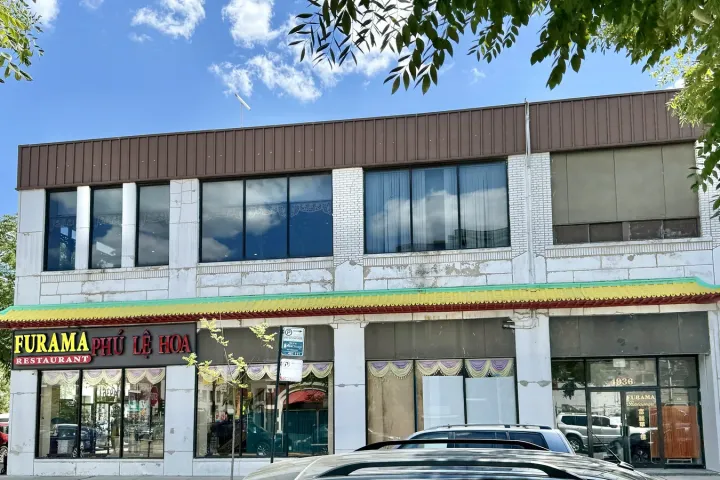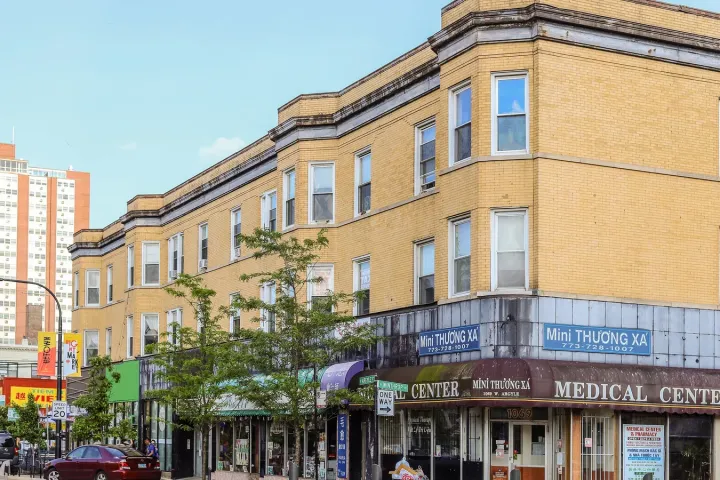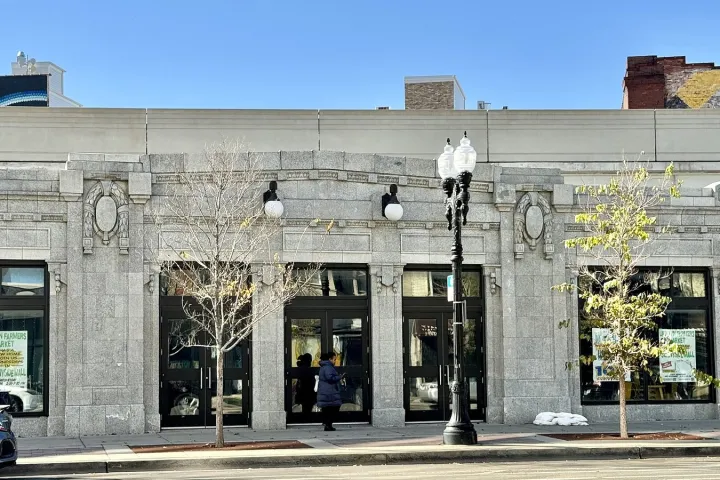
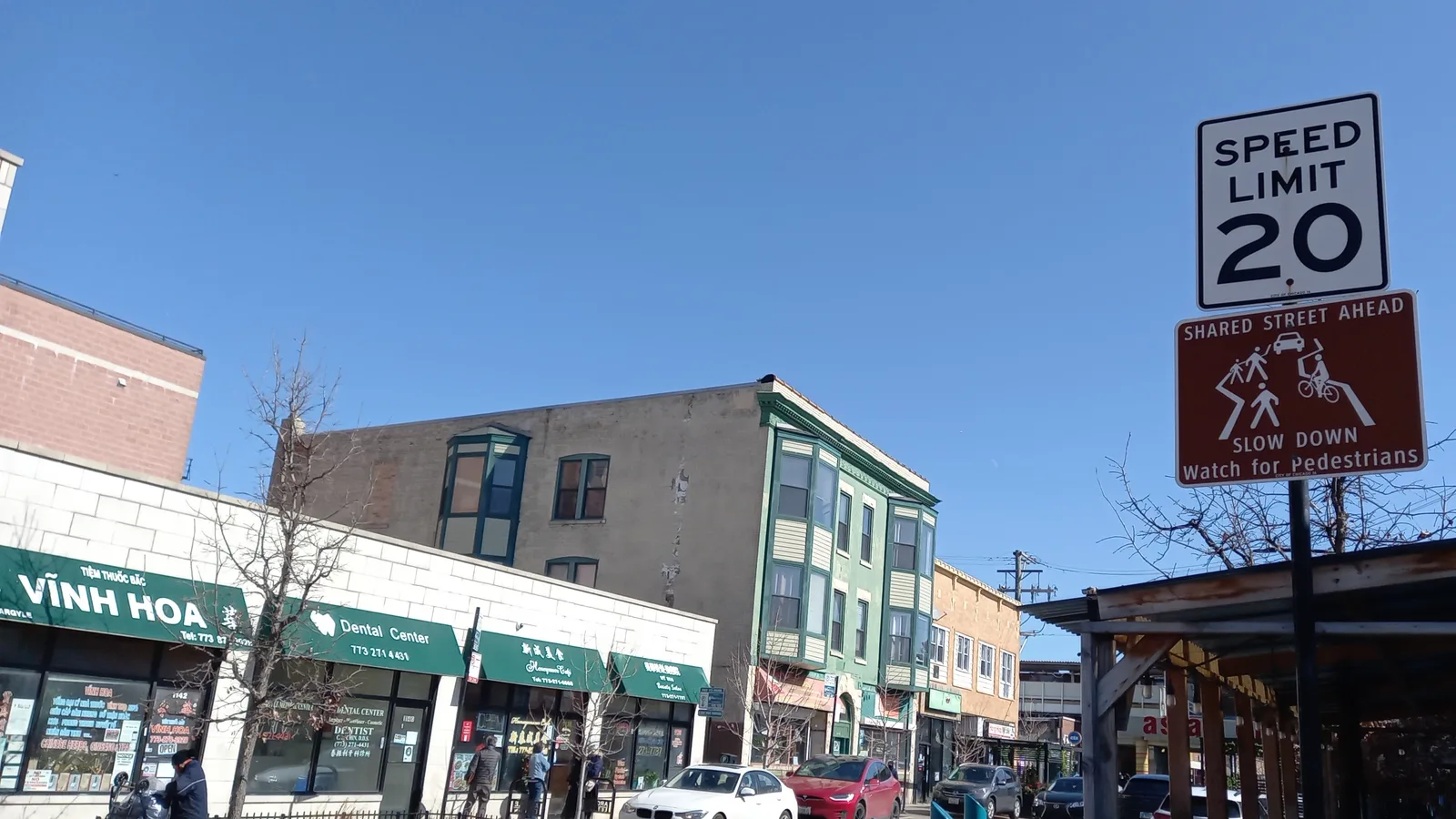
The shared street on Argyle Street. Photo: AlphaBeta135 / Wikimedia Commons, CC BY 4.0
Argyle Street looks different from most Chicago streets. Between Broadway and Sheridan, the curbs are gone. Sidewalk and roadway sit at the same level, separated by planters, trees and changes in paving rather than a raised edge.
The city built the shared street to slow cars, give pedestrians more room and make Argyle feel more like a plaza than a through route. It was one of the first projects of its kind in Chicago.
What owners like
Restaurant owners say the design makes the street more inviting for walking and outdoor dining. During festivals and special events, the flat surface makes it easier to close the street and fill it with tents, tables and crowds.
Some shopkeepers note that people linger more than they used to, which helps businesses that depend on browsing.
What they worry about
Parking and deliveries remain the most common concerns. Fewer marked parking spaces and the need to load and unload in a shared space can create congestion, especially for restaurants that receive frequent deliveries. Some older customers say they find the lack of curbs confusing.
The station factor
The Argyle Red Line station was rebuilt as part of the CTA’s Red and Purple Modernization project and reopened in July 2025. During construction, the street saw reduced foot traffic. With the station open, owners hope the combination of new transit and a pedestrian-friendly street will draw more visitors.
Lessons for other streets
Argyle’s experience has been studied by planners looking at shared streets elsewhere in the city. The project shows that design can change how a street feels, but it also shows that business needs, from deliveries to parking, have to be planned in from the start.
For now, Argyle remains a work in progress: a busy food street with a new shape, still adjusting to how people use it.
Linh Tran-Whitaker covers Argyle Street, dining and community life.