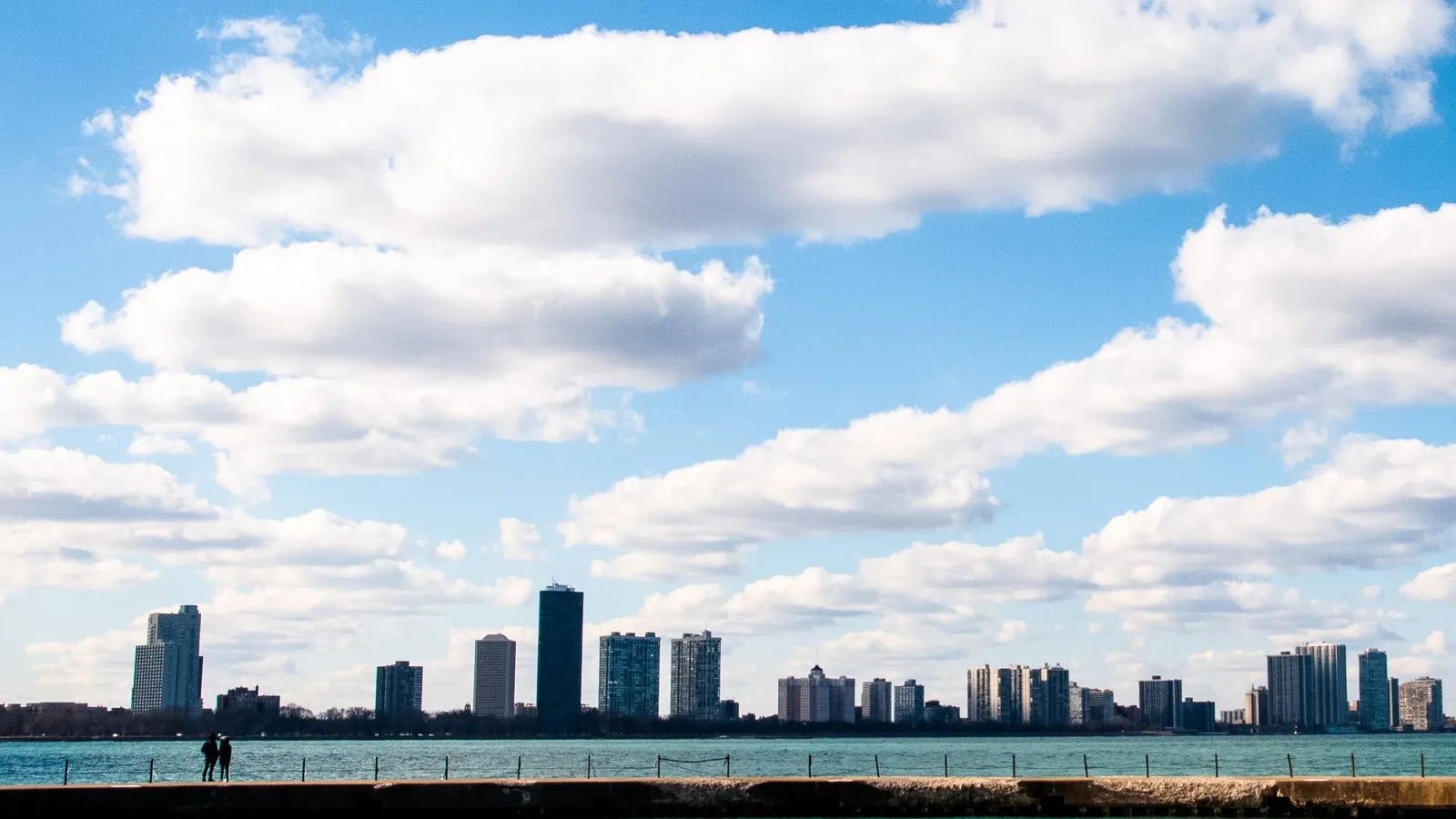
North Side lakefront high-rises seen from Montrose Harbor. Photo: Brandon Olafsson / Wikimedia Commons, CC BY-SA 2.0
The tent encampment in and around Margate Park, on Uptown’s lakefront, is now the largest in Chicago, and neighbors are pressing the city to do more for the people living there.
The encampment centers on the park at 4921 N. Marine Drive and stretches across both sides of Lake Shore Drive toward Foster Avenue, Block Club Chicago reported this week, citing Chicago Park District data.
The count
In a January count, the Park District found 57 homeless encampments in city parks, 39 of them on the North Side. The lakefront around Margate Park had the most tents, with 52.
A neighbor group, the Restore Margate Park Coalition, says the number has grown since then. Its members counted 76 tents in November, about two dozen more than the Park District’s January figure. More than 200 people have signed a petition asking the city to find housing for encampment residents and to bar tents in the park once the encampment is closed.
Phil Torres, who has lived near the park since 2011, told Block Club he helped start the coalition after seeing Northwest Side neighbors push for the removal of an encampment at Gompers Park earlier this year. “When the city and the Park District say it’s a citywide problem, that’s not being truthful,” he said. “That’s a Margate Park problem.”
What neighbors heard from the city
At a well-attended police beat (CAPS) meeting last Thursday, neighbors asked Chicago Police and Park District officials why more wasn’t being done. They described finding needles and human waste around the park and fires burning at night.
Dannette Salaam, the Park District’s newly appointed homeless support specialist, said the city is offering services and shelter, but there are limits. “The issue is we can’t force them to take the services,” she said. “They do have rights, and they are human beings, and we can’t make them move or accept shelter if they’re not ready yet.”
Gus Vasilopoulos, the Park District’s lakefront public safety manager, said crews carry out cleanups around the encampment every month. The Park District, the Department of Family and Support Services and the Department of Streets and Sanitation handle them together, a DFSS spokesperson said.
The latest cleanup was on Tuesday, Nov. 17. One resident, Jesus Brito Garces, told Block Club the city took his tent that morning. A DFSS spokesperson said no tents were removed, but that a “makeshift structure” was taken down under a Park District rule against structures that aren’t tents. The spokesperson said the resident turned down an offer of shelter.
Why the city’s approach has changed
In 2023, the city held two “accelerated moving” events at Margate Park that helped more than 60 people move into housing, according to Ald. Leni Manaa-Hoppenworth (48th), whose Edgewater ward includes part of the lakefront. She said nearly 200 people have moved from lakefront encampments into stable housing over the past three years.
Housing placement now works differently. Through the citywide Coordinated Entry System, run by the nonprofit All Chicago Making Homelessness History, people are prioritized by need, such as how long they’ve been homeless, whether they have young children, or serious medical needs, rather than by which encampment they live in. “If there are not housing units available, that is a barrier to bringing folks into housing,” Laura Bass, All Chicago’s interim vice president of strategy, told Block Club.
Money is part of the debate at City Hall. Mayor Brandon Johnson’s proposed 2027 budget includes $99 million to protect housing and homeless services, including $15 million for DFSS homeless services and $69 million in federal pandemic relief funds that could pay for more accelerated moving events. That budget still faces a fight in the City Council, as we reported earlier this month.
One man who has lived near the lakefront in Uptown for almost three years, and gave only his first name, Doug, told Block Club that outreach workers coming to the encampment “100 percent helps,” especially for people who don’t know how to find help on their own.
The lakefront is one of several public spaces in the neighborhood getting attention this year, including the new parks planned under the L tracks from Lawrence to Ardmore. For more neighborhood news, see our story on Dover Street’s new overnight permit parking.
Ruth Kaminski is the editor of The Uptown Ledger and covers neighborhood institutions and housing.