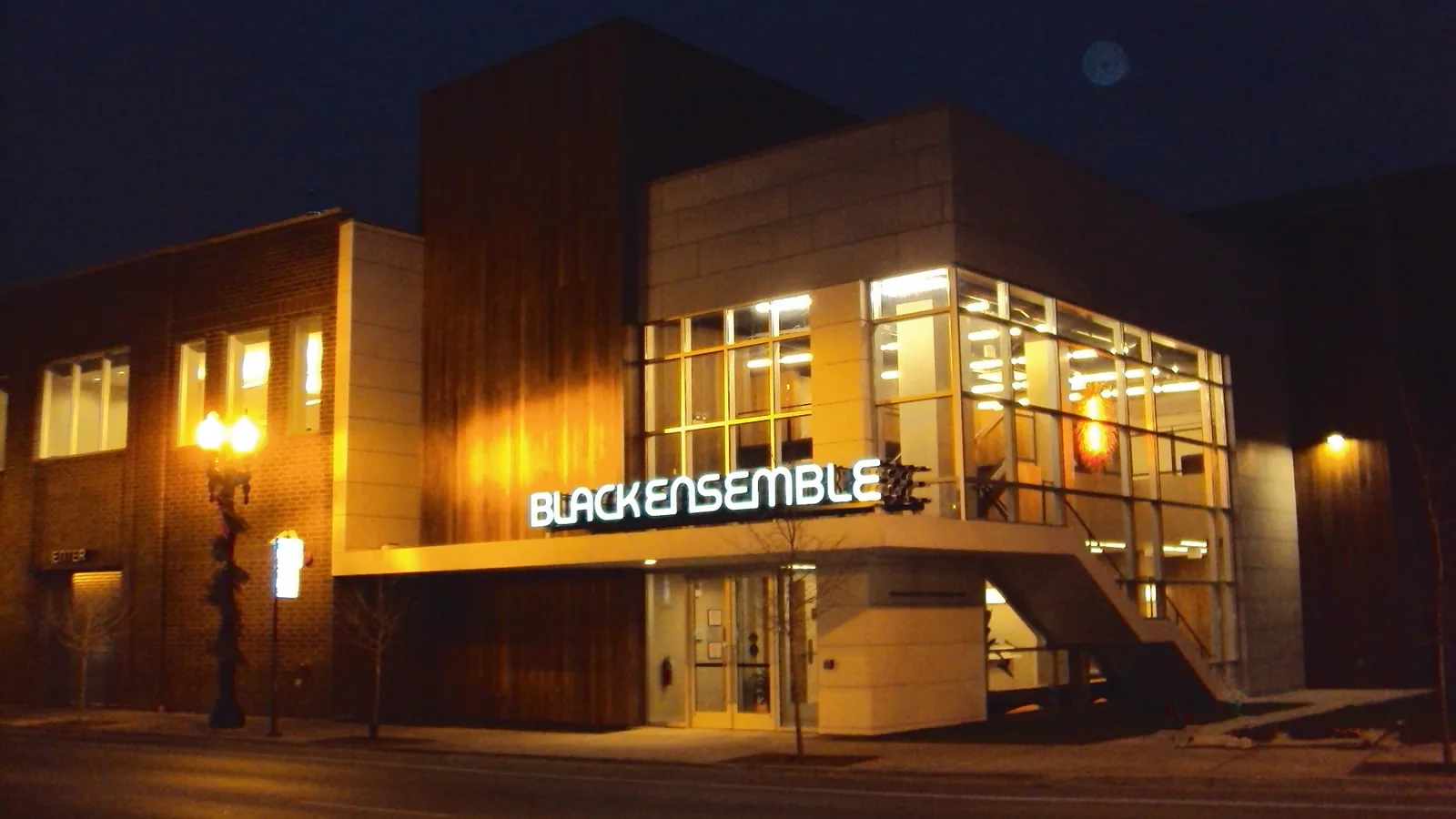
The Black Ensemble Theater Cultural Center at 4450 N. Clark St. Photo: Black Ensemble Theater / Wikimedia Commons, CC BY-SA 4.0
Jackie Taylor started Black Ensemble Theater in 1976 because she was tired of the parts she was being offered. The roles, she has said, were demeaning and negative, and she refused to keep putting those images in front of audiences.
So she built her own company and gave it a mission to eradicate racism. She does not pretend that happens quickly. Taylor describes the theater as a seed, planted to make slow, steady progress toward a day when racism is no longer part of daily life.
North side, south side
When Taylor began, she has noted, Black theater in Chicago was on the South Side and white theater was on the North Side. Black Ensemble now draws audiences from all over the city to Uptown. Taylor says she feels successful every day she looks out at a house full of people of every background learning about the depth of African American culture, and she often makes the point that people are more alike than different.
The company performed for years at 4520 N. Beacon St. In November 2011 it opened the Black Ensemble Theater Cultural Center at 4450 N. Clark St., a 50,000-square-foot building in a former warehouse, after a fundraising campaign of about $20 million.
A company bigger than its founder
Growth has meant a much larger organization. Taylor oversees a full-time staff of 18, a part-time staff of 26 and more than 500 volunteers. She has argued that anything meant to last has to be able to survive beyond the person who started it.
Black Ensemble is known for musicals about Black performers, among them Curtis Mayfield, Jackie Wilson and Teddy Pendergrass. Its current production, “Chicago’s Golden Soul,” which Taylor wrote in 1999, closes March 30. She sees it as a companion to the company’s Curtis Mayfield show and a lesson in the city’s musical history.
Dana Ferraro covers property taxes, small business finance and the economy.