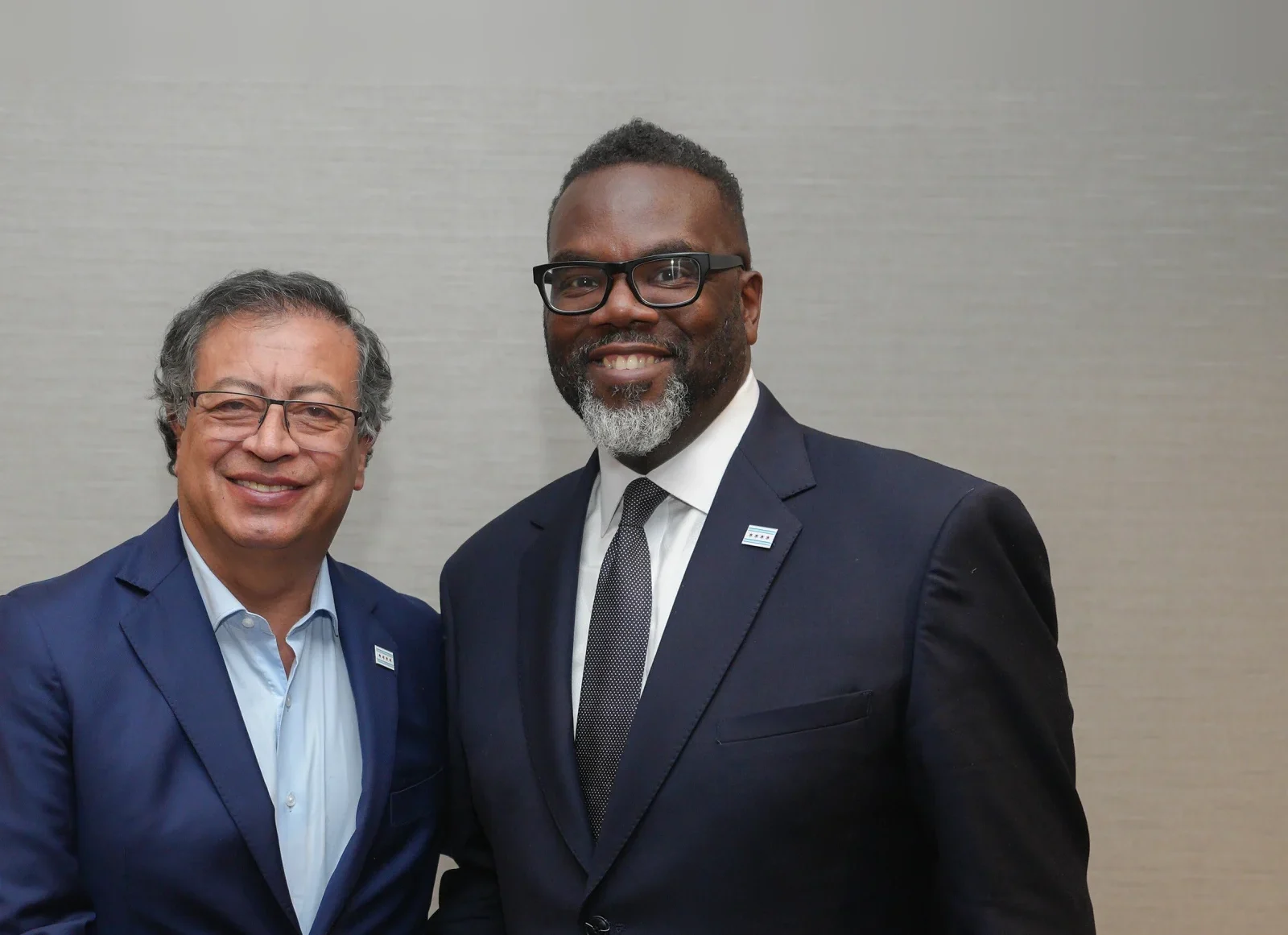
Chicago Mayor Brandon Johnson. Photo: Fotografía oficial de la Presidencia de Colombia / Wikimedia Commons, Public domain
Brandon Johnson became Chicago’s 57th mayor in 2023 after a runoff against Paul Vallas, having first unseated incumbent Lori Lightfoot in the opening round. He is running for reelection in 2027.
Johnson came to the office from the classroom and the labor movement. He taught social studies in Chicago Public Schools, including at Jenner Academy near the former Cabrini-Green homes, before becoming an organizer for the Chicago Teachers Union in 2011 and helping organize the 2012 strike. He served on the Cook County Board from 2018 to 2023.
Priorities
As mayor, Johnson has focused on homelessness, police reform and schools. Those issues have particular weight in Uptown, which has one of the largest concentrations of shelters, supportive housing and social service agencies on the North Side.
Business owners on Broadway and Wilson often say that outreach and housing programs affect their daily operations, from people sleeping in doorways in winter to the steady work of service agencies that are also local employers.
Budget pressure
Johnson has faced low approval ratings and tense budget fights with the City Council. Chicago’s long-term pension obligations, the end of federal pandemic aid and the needs of the public schools have all pushed against city finances. Each year’s budget brings debates over fees, property taxes and cuts that small businesses watch closely.
Proposals that affect permits, sidewalk cafe fees, licensing and parking all land on neighborhood commercial strips. So do decisions on police staffing and street cleaning.
Looking to 2027
The next city election is in early 2027. Candidates are expected to campaign heavily on public safety, the budget and downtown recovery. For neighborhoods like Uptown, the more practical questions will be about service delivery: snow removal on side streets, the pace of permits for new businesses and what happens to vacant storefronts on Broadway.
Uptown has seen big public projects in recent years, including the rebuilt Wilson and Lawrence Red Line stations. The next mayor, whether Johnson or a challenger, will inherit the question of how to turn that infrastructure into more businesses and jobs.
Joel Sandoval covers arts, music venues and nightlife.