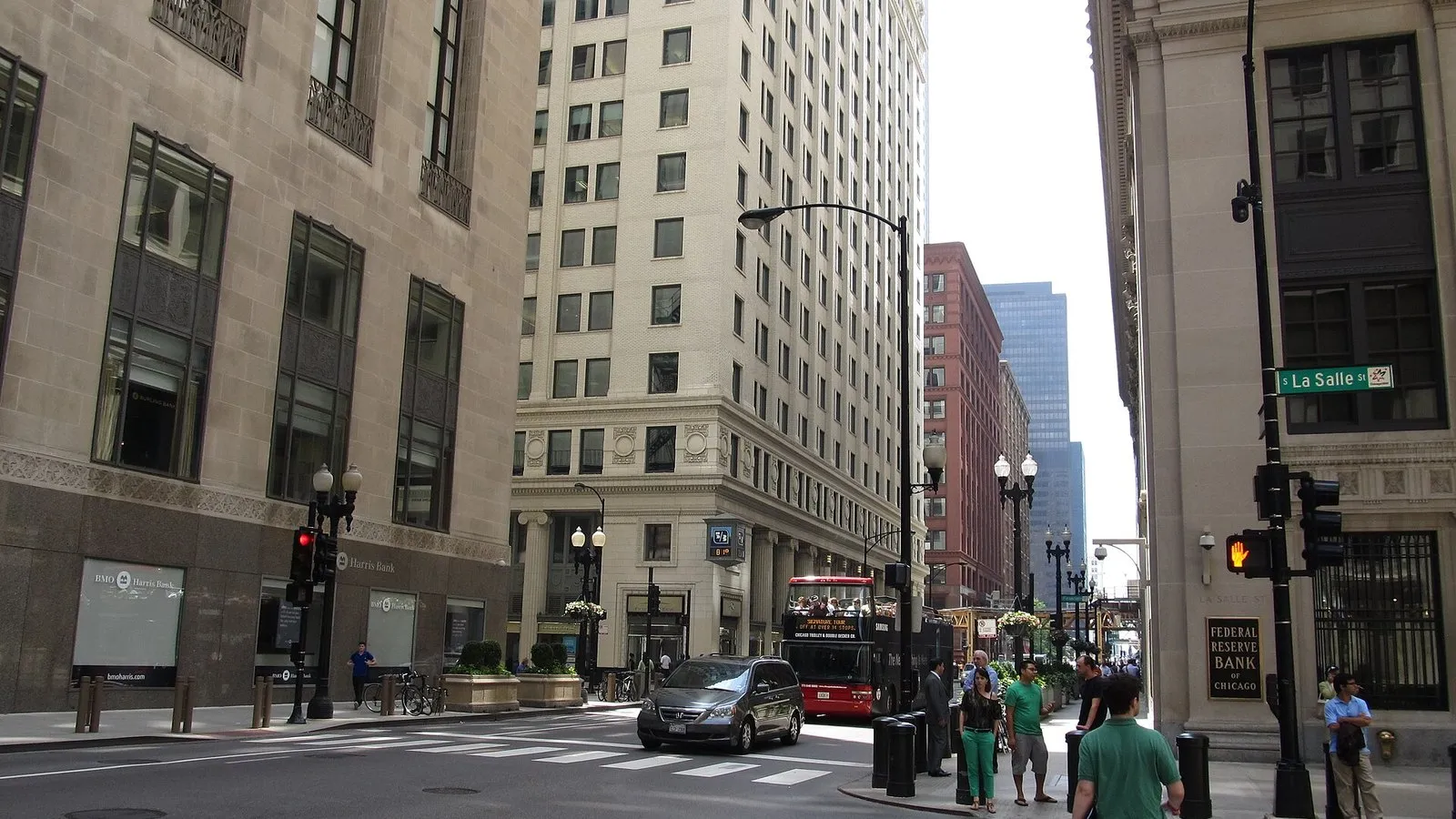
Jackson Boulevard and LaSalle Street in Chicago. Photo: Ken Lund from Reno, Nevada, USA, CC BY-SA 2.0, via Wikimedia Commons.
Mayor Brandon Johnson’s plan to raise Chicago’s lease tax from 15 percent to 20 percent would reach more than big employers. It also covers leased equipment, cloud computing and digital software, which is where a lot of small operators on Broadway, Lawrence and Argyle spend money. Twenty-eight aldermen say they won’t vote for it, and the mayor said Tuesday he is rewriting it.
What the tax covers
The Personal Property Lease Transaction Tax, or PPLT, applies to leased property, cloud computing services and digital software, according to CBS Chicago. The Daily Line adds that it is also charged on rentals such as e-scooters, tuxedos, and chair and table rentals. The mayor’s 2027 budget would raise the rate from 15 to 20 percent. His office estimates that would bring in $234 million. Car leases would stay at 15 percent, and leases of film production equipment would drop to 11 percent.
For a shop paying for cloud-based software or a restaurant renting tables and chairs for an event, the change would mean an extra 5 cents on every dollar of the lease or subscription charge.
Why the aldermen say no
On Tuesday, a group of 28 aldermen calling itself the Budget Accountability Coalition sent the mayor a letter saying it will not support the lease tax increase or his revived corporate head tax. Johnson needs 26 votes to pass a budget. The letter noted that the PPLT already went up, from 11 to 15 percent, in the 2026 budget, and was supposed to stay frozen for two years. “We gave Chicagoans our word on that rate,” the aldermen wrote. “If we break it one year later, why should any Chicagoan believe the next commitment this Council makes?”
The coalition wants the city to collect more of the debt it is owed instead, and said the plan as written is “a non-starter.”
What the mayor said back
In his own letter to the Council, Johnson said his team is reworking the head tax credits and the lease tax proposal, without giving specifics. He did not drop either one and said he is open to other ideas. The budget is $17.6 billion and is meant to close a gap of about $882 million, according to the city’s Chicago Politics budget tracker. It does not raise the property tax levy.
What it means for Uptown
The head tax, $25 a month per employee on employers with at least 125 workers, would not reach most storefronts on the Uptown corridors. The lease tax would, to whatever degree those businesses lease equipment, pay for software subscriptions or rent event gear. Nothing is final. The Council has until Dec. 31 to pass a budget, its next full meeting is Dec. 8, and no vote date has been set.
Uptown business owners who want to see how the lease tax would apply to their own costs can read the revenue ordinance (O2026-0029643), which is in the Committee on Finance.