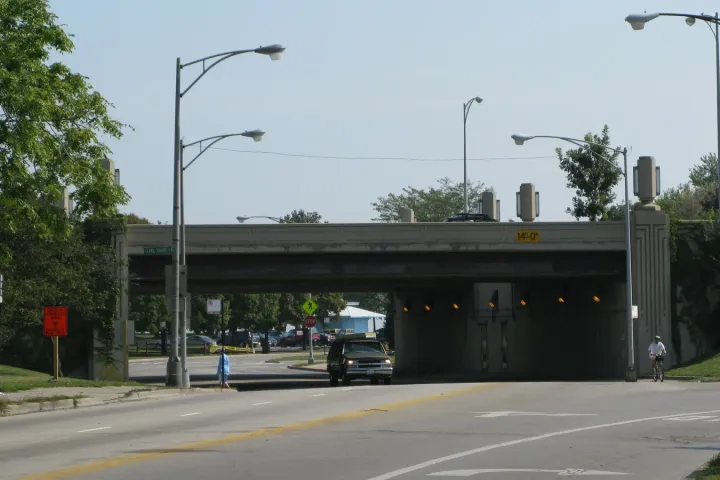
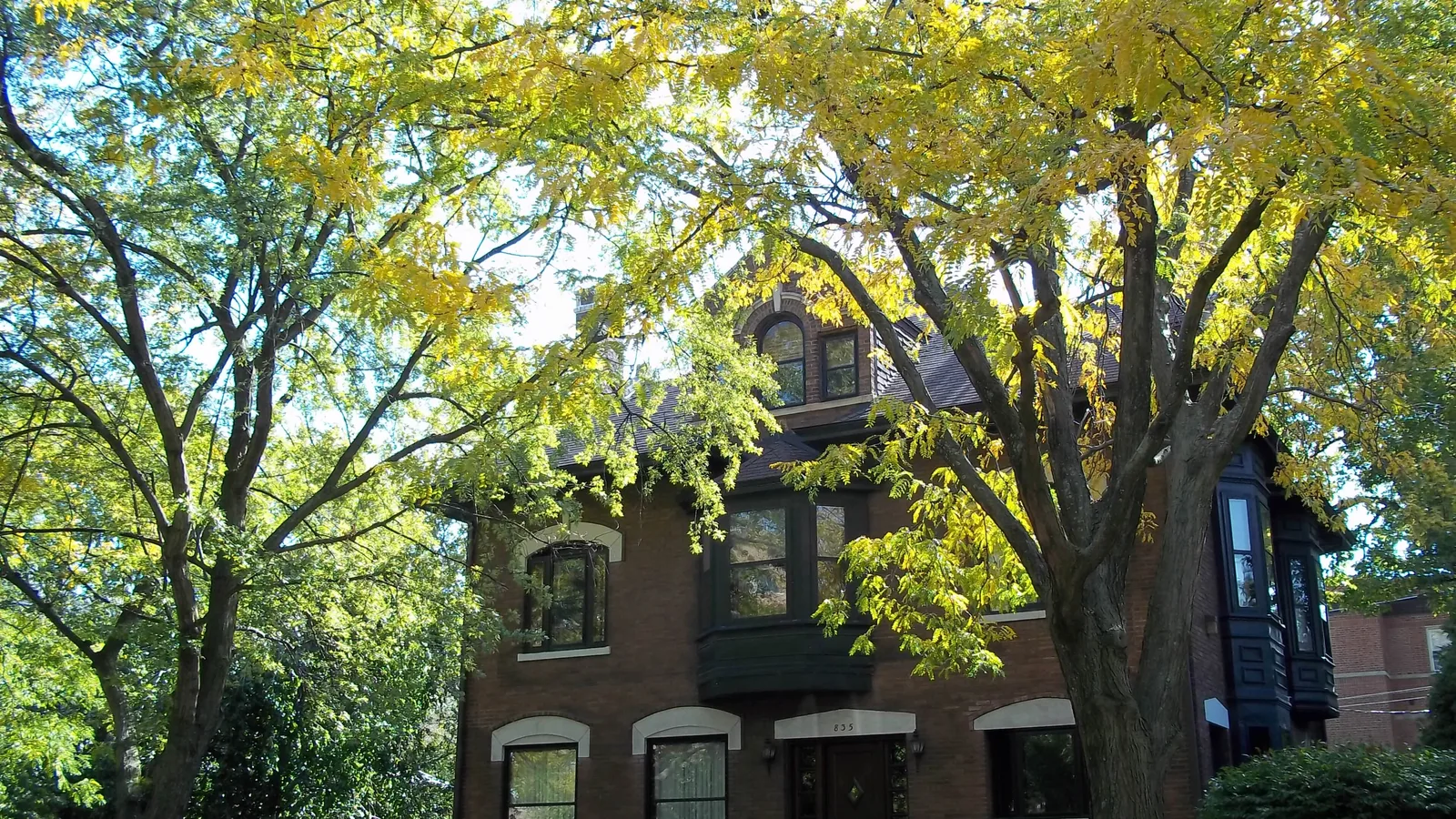
Historic homes on Castlewood Terrace in Uptown. Photo: Alanscottwalker / Wikimedia Commons, CC0
West of Broadway, between Lawrence and Montrose, lies Sheridan Park, a residential area of two-flats, greystones, courtyard buildings and single-family homes. It is one of the most intact early 20th century neighborhoods on the North Side, and one of the most contested when it comes to new construction.
The historic district
The Sheridan Park Historic District is listed on the National Register of Historic Places. That listing honors the architecture but does not by itself stop demolition. Stronger protection comes from city landmark status.
In 2007, the city designated the Dover Street District, covering a set of homes on Dover Street, as a Chicago landmark district. Exterior changes and demolitions there require review by the city’s landmarks commission.
The teardown pressure
Outside landmark boundaries, older buildings can be demolished and replaced with larger new ones, often condos or single-family homes. Neighbors and preservation groups have fought several teardowns over the years. In 2020, two buildings on Clark Street at the edge of the area were demolished, renewing calls for broader protections.
The housing argument
Supporters of new construction say Chicago needs more housing, and that rigid rules on older buildings limit supply and raise prices. Preservationists argue that two-flats and courtyard buildings provide naturally affordable housing and neighborhood character that new buildings rarely replace.
For buyers and owners
For owners, landmark status can affect renovation costs and timelines, but it can also support property values by protecting the look of a block. For buyers, it is worth checking whether a property is within a landmark district before planning major exterior changes.
The debate over Sheridan Park reflects a citywide question: how to add housing while keeping the neighborhoods that make Chicago distinctive.
Ruth Kaminski is the editor of The Uptown Ledger and covers neighborhood institutions and housing.